Sleep Health & Mattress Education
What to Look For in an Organic Mattress: Materials, Labels, and Construction
“Organic mattress” sounds like a single, clearly defined thing. In practice, it can describe a product made from a mix of materials, each with its own origin, processing, certification and role. To understand what a label really promises, look beyond the headline claim: examine the layers, verify which components are certified, and read the care instructions before deciding whether the mattress suits your needs.
Choosing a mattress is an intimate kind of research. You can compare dimensions and materials on a screen, but the result will be judged in the dark, after a long day, by a body that has its own habits and sensitivities. When a mattress is described as organic, the label may help narrow the field. It does not, on its own, explain the whole product.
One mattress may use certified organic cotton in its cover, another may include organic wool as a flame barrier, and another may have a certified latex layer beneath materials that are not certified organic. The word may refer to one ingredient or to a broader set of components. Construction matters, too: the same material can feel different depending on its thickness, density, position in the mattress and combination with other layers.
A careful assessment is less about finding one magic word and more about following the details. What is each layer made of? Which certification applies to it? How does the mattress support your body? Can it be maintained in a way that fits your household? Those questions turn a broad marketing description into information you can use.
Start with the scope of the claim
Certification is most useful when its scope is specific. A seal or statement may apply to a particular fiber, a latex component, a finished textile or the mattress as a complete product. Those are not interchangeable claims. A certified cover does not automatically establish that the internal foam, adhesives, flame barrier and every other component share the same certification. Nor does a component-level certification necessarily describe the finished mattress as a whole.
Begin by asking the manufacturer which components are certified and what documentation supports that statement. Look for the name of the certification, the material or product it covers, and details that allow you to verify the claim through the certifier’s own materials. If the product page uses “organic” prominently but offers no explanation of what the term applies to, treat that as an invitation to ask for clarification—not as proof of a particular construction.
Different labels address different questions. Some standards focus on whether agricultural fibers meet organic requirements. Others may address harmful substances in finished textiles or emissions from materials. A certification aimed at chemical testing is not necessarily a certification of organic farming, and an organic-fiber certification does not automatically answer every question about emissions, labor practices or the complete mattress. Read the standard’s purpose rather than relying on a seal’s appearance.
It is also useful to distinguish between an ingredient’s origin and its processing. A fiber might come from an organically managed source, while the finished product passes through additional manufacturing steps. Certification systems vary in what they review and where their oversight begins and ends. For a meaningful comparison, seek the standard’s full name and the product or component identifier, then check whether the documentation corresponds to the model under consideration.
Good documentation should make the boundaries clear. A seller should be able to identify what is certified, what is not, and how the claim relates to the mattress you will receive. If a mattress has multiple versions or optional layer configurations, confirm whether the same certification applies to each configuration. A label is a useful starting point; transparency is what makes it informative.
Understand the materials, not just the names
Organic mattress materials are often presented as a short list: cotton, wool, latex. Each name covers a range of products, and each material contributes differently to the sleep surface. Knowing the likely role of a material helps you connect the specification sheet to practical questions such as feel, airflow, resilience and care.
Cotton: the cover and surface
Cotton commonly appears in mattress covers and sometimes in quilted surface layers. Its feel depends on the fabric construction, finish, padding and the layers beneath it—not only on whether the fiber is organic. A cover may be woven or knitted, smooth or textured, taut or quilted. These details affect how the surface feels against bedding and how much the cover changes the sensation of the comfort layer below.
Ask whether the cotton is certified organic, which part of the mattress uses it, and whether the cover is removable or washable. These are separate questions. A cover made with certified organic cotton may still require spot cleaning, while a washable cover may contain a mix of fibers. The care label, rather than an assumption based on fiber type, is the authority for maintenance.
Wool: a natural fiber with a functional role
Wool can be used in a quilted layer or as part of a mattress’s flame-barrier construction. It may also contribute a soft, springy feel near the surface. Its presence does not mean that every other part of the mattress is wool or organic. If the wool is central to an organic claim, ask whether it is certified and what function it serves in the particular design.
Wool-containing mattresses may need care that differs from ordinary bedding. In some designs, the cover cannot be removed or laundered, and moisture or stains may require careful spot treatment. This does not make the material unsuitable, but it does make maintenance part of the buying decision. The practical question is not simply whether a material is natural; it is whether the finished mattress can be cared for appropriately in your home.
Latex: a category with meaningful differences
Latex is a resilient material used in comfort layers and support layers. Product descriptions may distinguish between Dunlop and Talalay processes, or between natural, blended and synthetic latex. These terms describe different aspects of material and manufacture; they should not be treated as automatic proof of an organic claim. When a product is described as organic latex, confirm which latex layer is covered by the certification and whether other layers use different materials.
Latex can feel buoyant and responsive, but the sensation depends on firmness, thickness, layering and the sleeper’s body. A latex comfort layer over a firm base may feel quite different from a thicker, softer latex arrangement. Material names help you understand the construction, but they cannot replace a clear description of firmness options and a realistic assessment of comfort.
Other components deserve attention
A mattress is a system, not a single ingredient. It may include a support core, comfort layers, quilted padding, a cover, a flame barrier and joining materials. Ask whether the manufacturer identifies these components and explains how they are assembled. If a product claims to avoid particular substances or manufacturing methods, look for precise wording and supporting documentation rather than assuming that “natural” or “organic” covers every part of its construction.
Read the mattress from the outside in
Layer construction is the bridge between a material list and the way a mattress may feel. Most designs can be understood through three broad elements: the cover, the comfort layers and the support core. Their arrangement affects cushioning, pressure distribution, responsiveness and how the mattress holds the body. The exact outcome varies with a sleeper’s weight, shape, position and personal preference.
- The cover is the outer surface. It may add a small amount of padding, but its most visible characteristics are its fabric, quilting, fit and care requirements.
- Comfort layers sit nearer the sleeper and provide the initial cushioning or contouring. Their material and thickness can change how much the body settles into the bed.
- The support core provides the deeper structure. It helps determine the mattress’s overall stability and how it responds under load.
When evaluating a layer diagram, look for order, thickness and material—not just a list of ingredients. A description that says “latex, wool and cotton” leaves important questions unanswered: Where is each material located? How thick are the layers? Is the support core also latex? Does the construction vary by size or firmness? Specific answers help you compare mattresses with similar-sounding claims.
Some mattresses let the owner change or rearrange layers. Customization can be useful when firmness preferences are uncertain or when partners want different comfort on each side. It also introduces practical considerations: whether the layers are wrapped, how the cover opens, whether adjustments require help, and whether a change affects the warranty. Make sure the adjustment process is clearly explained before counting customization as an advantage.
Consider the sleeping position as one factor, not a prescription. Side sleepers often pay close attention to cushioning at the shoulder and hip; back and stomach sleepers may have different preferences for support and surface firmness. Yet body proportions and comfort vary, so a position-based rule cannot guarantee a good match. A useful mattress supports a position you can maintain comfortably without creating persistent pressure or a sense of instability.
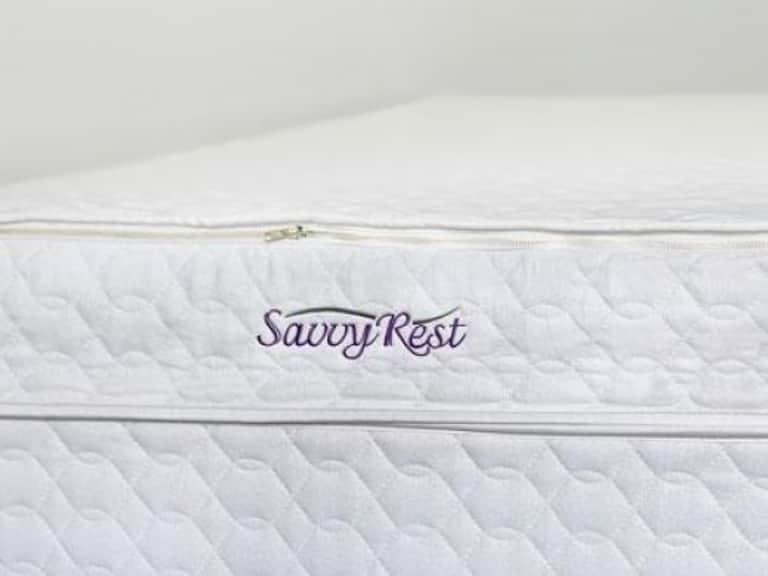
For example, the Savvy Rest Tranquility Latex Mattress is described as a seven-inch mattress with two customizable latex layers, an organic cotton outer casing and an organic wool flame barrier. Its specifications illustrate why component-level reading matters: the product names particular materials and their functions, while the latex layer options can vary. The listed care information also says the cover is not washable or dry cleanable and recommends a mattress protector. Those details are as relevant to an informed decision as the word “organic.”
Ventilation and temperature are construction questions
Shoppers often ask whether a mattress sleeps cool. No single natural fiber can guarantee a particular temperature experience. Heat and moisture management depend on the full construction, the sleeper, the room, bedding and personal sensitivity. A close-fitting cover, dense comfort layers, a breathable structure and the kind of sheets used can all shape the sleep climate.
Ask how the mattress is constructed to encourage airflow and whether the manufacturer describes the role of each layer. Then consider the rest of the bed: a mattress protector can alter the surface feel, and sheets or a thick topper can change how much warmth is retained. A claim such as “breathable” is most useful when paired with a clear account of material and design rather than treated as a guarantee of cool sleep.
Natural materials can have particular moisture-handling characteristics, but they do not remove the need for sensible bedroom care. Follow cleaning directions, allow bedding to dry fully after washing, and use a protector that is compatible with the mattress. Avoid adding unapproved liquids or treatments; they may damage materials or affect warranty coverage.
The fine print: care, fit and durability
Care instructions are part of a mattress’s design, not an afterthought. A removable cover may be convenient, but “removable” does not necessarily mean machine washable. Some covers are spot-clean only; others may need professional care. Check the instructions for stains, moisture, rotation and cleaning before purchase, especially if the mattress will be used by a child, in a guest room or in a household where spills are likely.
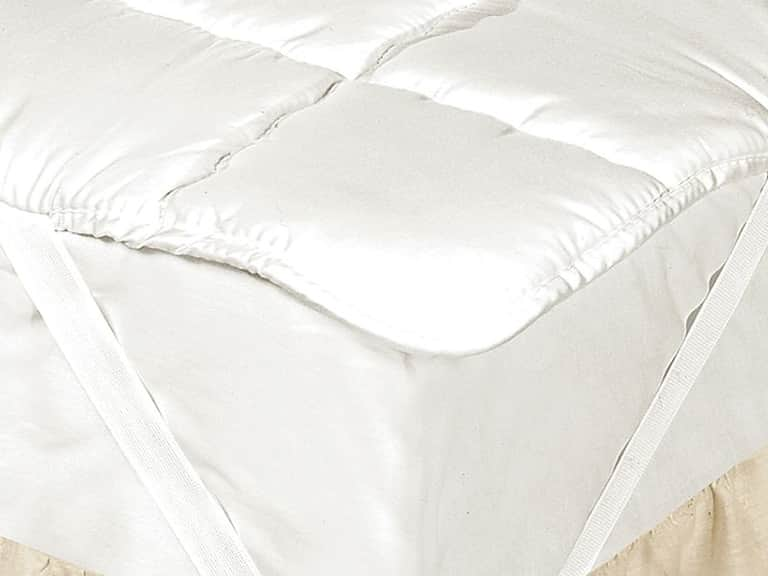
A mattress protector can help guard the sleep surface against ordinary wear and accidents, but confirm that it fits the mattress depth and does not conflict with the maker’s care guidance. A waterproof protector may change the feel or airflow of the bed. The best choice balances protection with compatibility, rather than assuming all protectors behave alike.
Dimensions matter beyond the standard labels of twin, queen or king. Measure the bed frame and confirm the mattress’s exact length, width and height. A thicker mattress may require deep-pocket sheets, and a particular base may have compatibility limits. If the mattress is intended for an adjustable base, verify that compatibility directly in the product information.
Finally, read the warranty and trial or exchange terms. A long warranty does not necessarily cover ordinary softening or a comfort mismatch, and a layer exchange policy may have conditions. Review what counts as a defect, how claims are handled, and whether the mattress must be used on an approved foundation. Clear terms provide a more realistic picture of ownership than a headline promise alone.
A practical checklist for comparing organic mattresses
When product pages begin to blur together, use a short checklist. Record the answers for each mattress so that you compare like with like:
- Which specific components are certified, and what is the exact certification or standard?
- Can the certification be verified for the model and configuration being considered?
- What materials make up the cover, comfort layers, support core and flame barrier?
- How thick is each layer, and can any layers be rearranged or replaced?
- What firmness options are available, and how does the construction relate to the preferred sleeping position?
- Is the cover removable, washable, spot-clean only or professionally cleaned?
- What protector, foundation and bed-frame requirements does the manufacturer specify?
- What do the warranty, trial period and exchange terms actually cover?
If a seller cannot answer a question immediately, ask for written clarification or product documentation. A responsible comparison does not require assuming bad intent; it requires enough detail to distinguish a substantiated claim from a vague one. The more precisely a product’s materials and limits are described, the easier it is to judge whether it fits your priorities.
What an organic label can—and cannot—tell you
An organic certification can provide meaningful information about a defined material or process. It cannot tell you whether a mattress will feel comfortable, whether its firmness suits your body, or whether its care demands fit your life. Those judgments require attention to construction and, where possible, a chance to test the mattress under the retailer’s stated trial or exchange terms.
Nor should organic be treated as a synonym for universally healthier, safer or more sustainable. Such broad conclusions depend on the standard, the full product, its manufacturing, its useful life and its disposal. The most reliable approach is to make specific claims answer specific questions: What is certified? What does the certification verify? Which components fall outside its scope?
That precision is not cynicism. It is the basis of trust. A clear description of materials, certifications and care helps shoppers make decisions without asking a single label to do more work than it can. It also makes room for individual priorities: some people may value certified fibers, others may focus on adjustability, maintenance, comfort or durability. A good comparison keeps those considerations visible together.
A better question than “Is it organic?”
The most useful question is more detailed: “Which parts are certified, how are they assembled, and what will living with this mattress require?” From there, examine the cover, comfort layers and support core; verify the scope of each certification; and weigh firmness, temperature, maintenance and fit against your own needs.
Mattress labels can compress a complicated product into a few appealing words. Reading beyond them restores the missing context. When materials are documented and construction is explained, “organic” becomes one useful piece of evidence—not a substitute for understanding the bed beneath the sheet.